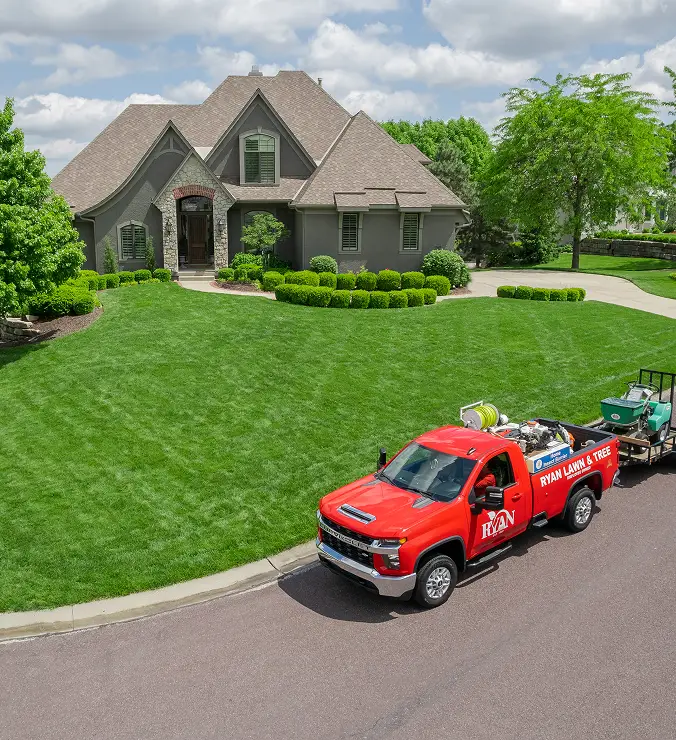
Professional lawn care services are the ideal way to create and maintain a gorgeous lawn and outdoor landscapes. Many busy homeowners simply don’t have the necessary time to devote to get the results they desire. Thankfully, the experts at RYAN are ready to step in with customized lawn care services.
RYAN offers everything you need for lawn care, tree & plant care, pest control, irrigation, and landscaping. Whether you require tree planting, tree trimming, or tree and stump removal, RYAN provides all the services you require to keep your outdoor space healthy and beautiful. Find out more about some of our most popular services in the Tulsa area.
Irrigation
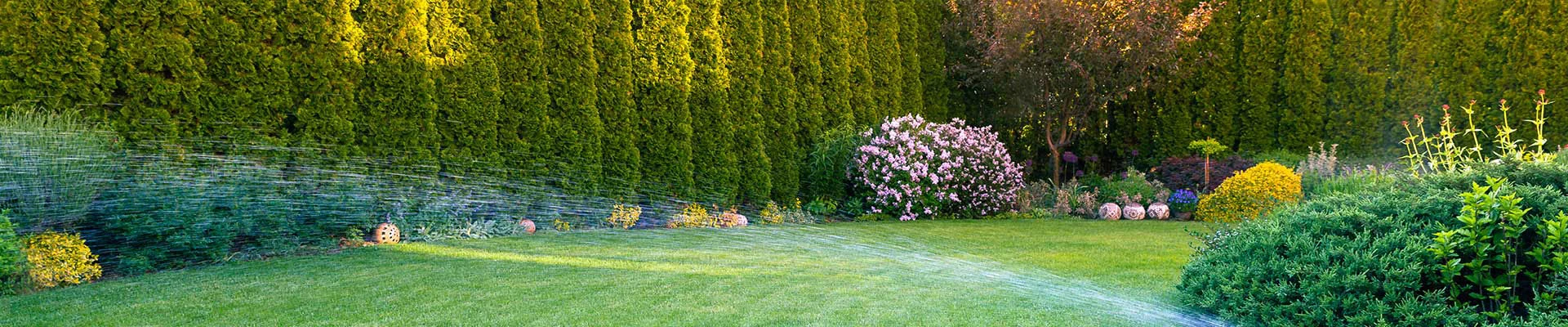
Adequate rainfall is crucial for a lush-looking lawn and healthy trees and plants. Dry spells in the weather can damage the health and appearance of your yard. Sprinkler and irrigation systems are the perfect solutions to deliver much-needed moisture during times of little rain.
Having an irrigation system installed gives you better control over watering. The team at RYAN first assesses your yard to design a customized system complete with rain sensors and carefully positioned sprinklers to deliver water where and when it’s needed. Once installed, you can easily control your new irrigation system from either your garage or the convenience of our smartphone app.
Maintenance & Repairs
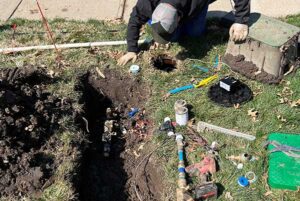 For your irrigation system to remain effective, it must work efficiently. We provide irrigation maintenance and repairs in Tulsa to keep your sprinklers and control box in great condition. This service includes fixing leaks, checking the pressure, and examining the sprinkler heads for cracks and leaks. Our team also does winterization to blow the water from the pipes to keep them from freezing.
Tree & Plant Care
Constant upkeep and season-appropriate maintenance and treatments are essential for a beautiful and vibrant yard. The health of each of your trees and plants contributes to the overall appearance of your home. Professional Tulsa tree and plant care solutions from the experts at RYAN are a wonderful way to get the lawn and landscaping you’ve always wanted. From identifying signs of disease or insect infestation to safely handling routine pruning and trimming, RYAN has trained experts that deliver beautiful results.
Insect & Disease Control
Insects and diseases are common problems that require swift action to correct before they can cause extensive damage or even kill your trees and plants. RYAN has certified arborists available to assess your unique situation and give you a diagnosis and treatment plan.
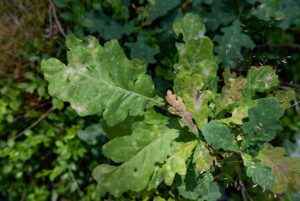 Many bugs and diseases are specific to certain species of trees and plants. Our teams are familiar with the local pests and disease threats and know what to look for and which types of treatments work best. Years of training and experience allow us to offer effective preventative measures to protect your plants from common insect invaders and diseases.
If you spot an existing problem, we provide you with the advice you need to save your tree whenever possible. You can trust RYAN to remain honest and professional at all times. We only recommend necessary treatments, and won’t encourage you to spend money on something you don’t need or that is unlikely to work.
Tree Pruning & Trimming
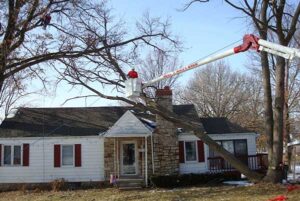 Overgrown trees aren’t just an eyesore that detract from the beauty of your yard, but they also pose significant threats. Falling tree branches can cause injuries and damage to your or your neighbor’s property. Branches that hang over your roof also provide the perfect opportunity for animals like squirrels to get on your roof and even find their way into your home. Let our tree specialists safely trim your trees to lessen liability and keep your home looking great.
Precision is crucial when it comes to trimming trees. RYAN’s ISA-certified arborists are trained to identify the branches that are hindering healthy lawn growth or otherwise pose a risk and remove them in a safe way. RYAN Lawn & Tree also offers emergency tree trimming services following a storm or other event that causes significant tree damage that demands fast action.
Tree Removal
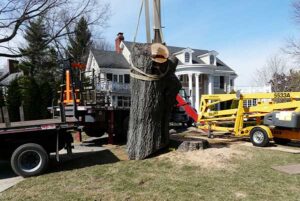 Sometimes you need to have a tree cut down and removed. Whether that’s because the tree is diseased, weakened, or taking over your lawn, unhealthy or overgrown trees are a liability you must address.
It’s best to hire the services of a professional team who understands how to remove the tree safely. Our RYAN tree experts have the experience and tools to handle trees of all sizes, even those large enough to require the use of a crane to remove the branches. Once the tree is cut down, all branches get chipped and cleared away to leave your property clean of debris and mess.
Stump Grinding
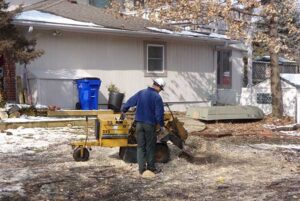 Professional Tulsa stump grinding is a great way to get rid of stumps in your yard and ensure the tree doesn’t grow back. Stump grinding is fast and effective, removing all traces of the stump to a foot or more below the ground. Once the stump is taken care of you can choose to have the area filled in with dirt or seeded with grass to seamlessly blend into the rest of your lawn.
Tulsa Landscaping
Your landscaping efforts have a huge impact on the overall appeal of your home. The selection and layout of trees, shrubs, ornamental plants, lighting, mulch, and other landscaping elements take careful planning to create and regular maintenance once completed.
Our experts at Ryan Lawn & Tree have decades of experience combined with local knowledge of the area’s climate, soil conditions, and native plants to offer you invaluable advice on the best plants and landscaping solutions to create the effect you desire.
Tree & Shrub Planting
 The biggest focal points of any landscape design are the trees and shrubs you plant. We have arborists on staff that come to your home to discuss your project and make recommendations on the best tree and shrub species for your property. We factor in the spots you select for planting, the sun exposure, soil composition, and the height and shape of the tree.
Whether you want shade trees, flowering trees, or a mixture of both, we can guide you through the process from selecting the correct trees to picking the ideal time to plant. Our RYAN Pros show you how to care for your newly planted trees to ensure they get a great start and establish a healthy root system. As part of our tree planting services, we include a follow-up in 12 months to inspect the tree and make sure it’s healthy and growing properly.
Get Irrigation, Landscaping, and Tree & Plant Care Services from the Pros at RYAN
Do you have a new landscaping project on your mind that you want to bring to fruition? RYAN can help you select the correct trees and shrubs to create your desired effect and install the irrigation system needed to keep the area watered so your grass and plants thrive. Or perhaps you’ve noticed that your lawn and trees aren’t looking as robust as you would like and you need some assistance with tree and plant care. Our local experts have more than 35 years of experience identifying problems and providing environmentally conscious solutions. We can rid your yard of pests, trim trees for better health and continued growth, and even remove diseased or dangerous trees before they create a larger issue.
Contact Ryan Lawn & Tree today to get a Free Estimate for your project. We are the company of choice for every lawn and tree care service in Tulsa and the surrounding areas, providing a 100% satisfaction guarantee. Get started with RYAN today to experience for yourself the exceptional quality and service we deliver to each of our customers.